
Traditional Sequence
1
Alarm
2
Move to assembly point
3
Gather and count
4
Identify missing people
For decades, fixed muster points have been central to emergency planning. An alarm sounds, personnel move to an assembly area, supervisors count people and emergency teams identify who is missing.
That model remains useful in many scenarios. But large, distributed and safety-critical operations create situations where requiring every person to move before they can be accounted for may add risk, delay or uncertainty.
A fixed muster process assumes that the route to the assembly point is safe, the assembly point itself remains suitable and everyone can physically reach it. Fire, gas release, hostile attack, severe weather, flooding or disruption across multiple areas can challenge those assumptions.
The operational question should not begin with "Who reached the muster point?" It should begin with "Who is SAFE, who needs HELP and who has not responded?"
LivePOB allows personnel to report SAFE or request HELP from the safest available location, while continuing to follow the emergency instructions issued by HSE, Security and the responsible authorities. The system does not force people to travel merely to prove that they are safe.
This changes the sequence of accountability. Instead of moving first and counting later, personnel report their status and emergency teams immediately see which people require follow-up.
Alarm
Move to assembly point
Gather and count
Identify missing people
Alarm or incident activation
Report SAFE or HELP
Identify non-responders
Focus follow-up and response
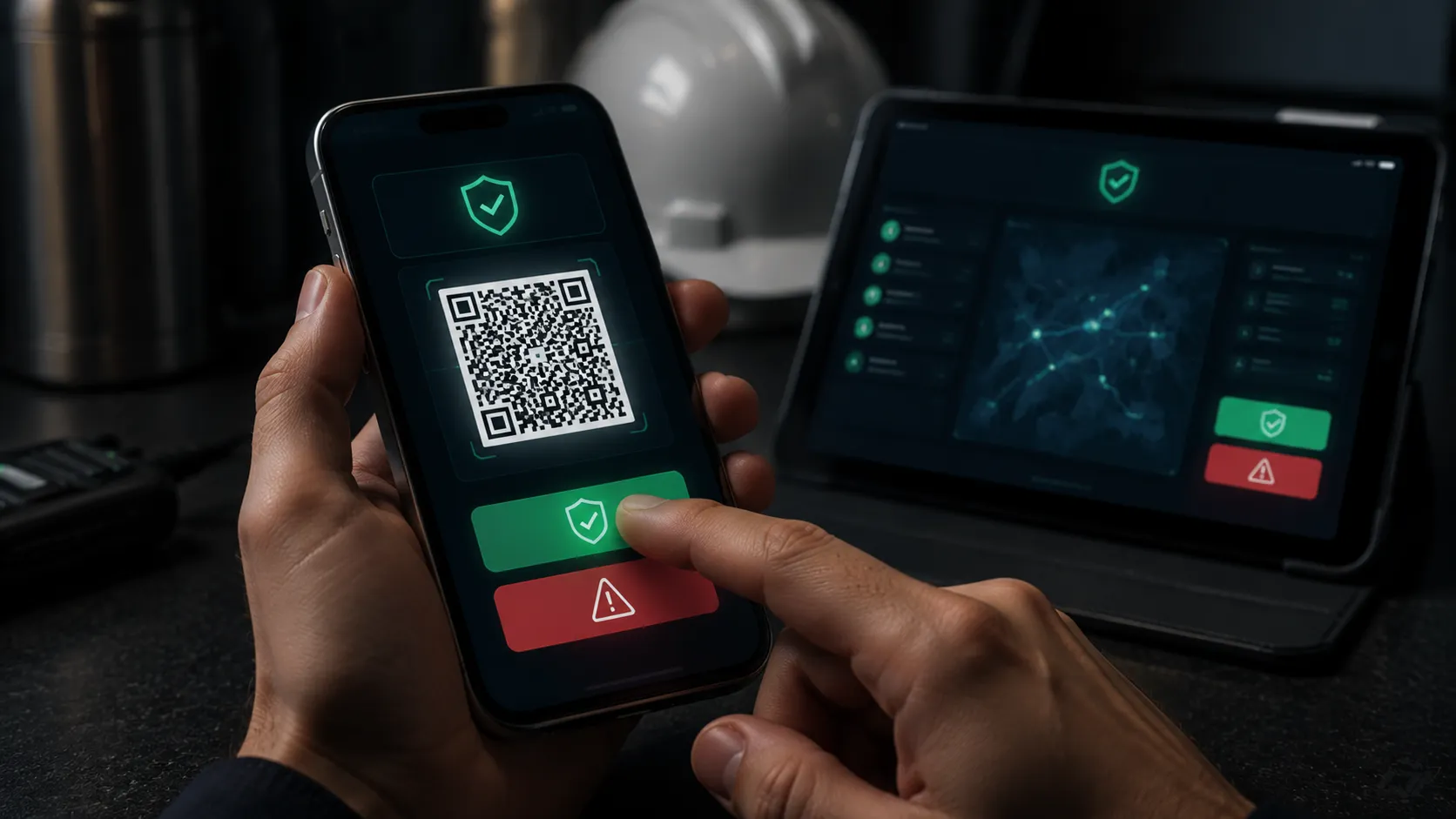
A self-muster workflow must remain practical when people lose access to their normal device, leave a work area quickly or move into a temporary shelter. LivePOB links the status report to the person's QR identity rather than to one registered handset. Any suitable internet-connected device can be used, without application installation or proprietary emergency hardware.
A gate record, badge detection or previous location can provide context, but none of them confirms that a person is currently safe. LivePOB keeps each non-responder visible until the status is resolved through a confirmed report or authorized verification.
LivePOB does not replace emergency leadership or operating procedures. It gives HSE, Security and Operations better information, faster visibility and stronger evidence so they can act with greater confidence when conditions are changing.
Experience the SAFE, HELP and non-responder workflow using a normal connected device.